Note
Go to the end to download the full example code.
Simulation of Realistic Geometry
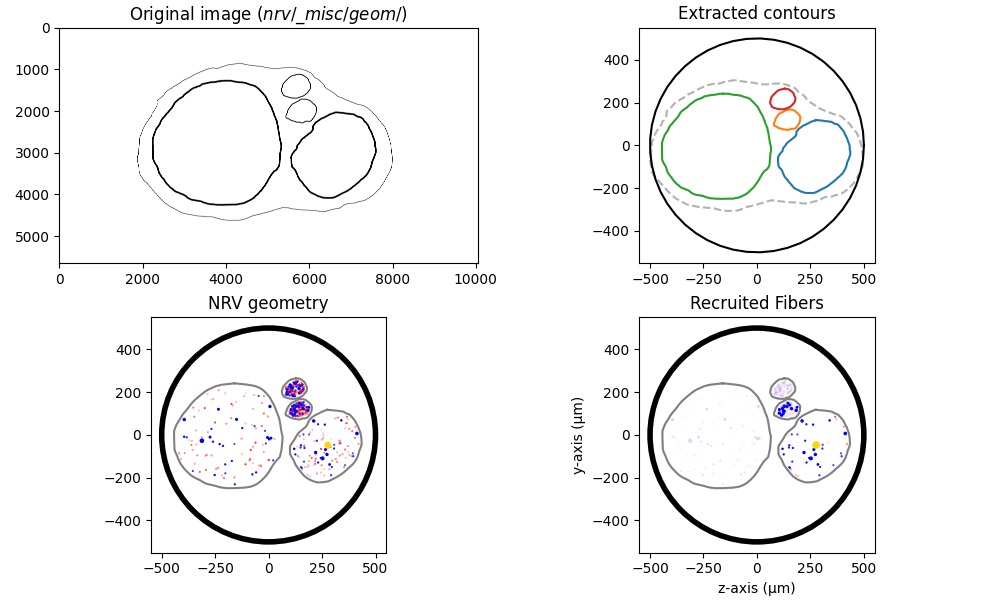
Practical example illustrating how to build a realistic nerve geometry from an image and simulate it with NRV.
Warning
This example requires opencv-python to be installed. You can easily install this library with pip:
pip install opencv-python
import nrv

import cv2
import numpy as np
import matplotlib.pyplot as plt
from scipy.interpolate import splprep, splev

image_path = nrv.__path__[0] + "/_misc/geom/smoothed_edges_white.png"

d_nerve = 1_000 # um
l_nerve = 10_000 # um
Step 1: Load and process the image
Note
Since the image is already processed, the following function is quite light. Additional processing would be required to generate a nerve directly from histology images.
Tip
See opencv-python contour tutorials for more information.
def load_and_process_image(ax:plt.Axes)->np.ndarray:
    """
    Load the image and process it to simplify contour detection.
    """
    im = cv2.imread(image_path)    # Load image
    imgray = cv2.cvtColor(im, cv2.COLOR_BGR2GRAY)
    ret, thresh = cv2.threshold(imgray, 127, 255, 0)
    ax.imshow(im, label="image")
    ax.set_title("Original image ($nrv/\\_misc/geom/$)")
    return thresh
Step 2: Extract contour points from the image
Note
This function is adapted to the selected image and can be improved for nerve histological images.
def extract_contour_points(ax:plt.Axes, thresh)->list:
    """
    Detect all contours in the image and keep only the points from fascicle contours. Additionally, rescale the point positions from pixels to micrometers to match the desired nerve diameter.
    """

    # Detect contours on the binary image using cv2.CHAIN_APPROX_SIMPLE
    contours, hierarchy = cv2.findContours(thresh, cv2.RETR_TREE, cv2.CHAIN_APPROX_SIMPLE)
    hc_list = hierarchy.squeeze()

    # ID of the inner nerve contour
    # As image frame is 0, outer_nerve is 1
    nerve_id = 2

    # Center nerve at (0,0)
    points = contours[nerve_id].squeeze()
    center_pix = np.mean(points, axis=0)
    nerve_points = points - center_pix

    # Convert pixel index to micrometers
    radius_pix = np.max(np.abs(nerve_points))
    rescal_factor = d_nerve / (2 * radius_pix)
    # Flip ordinate axis (as pixel index increases downward)
    rescal_factor *= np.array([1, -1])

    nerve_points *= rescal_factor

    ax.plot(*nerve_points.T, "--", color=("k", .3))

    theta = np.linspace(0, 2 * np.pi)
    ax.plot(d_nerve * np.cos(theta) / 2, d_nerve * np.sin(theta) / 2, color="k")

    fascicles_points = []
    for _i, _c in enumerate(contours):
        if hc_list[_i, -1] == nerve_id:
            points = _c.squeeze()
            fascicles_points += [(points - center_pix) * rescal_factor]
            ax.plot(*fascicles_points[-1].T)
    ax.set_aspect("equal")
    ax.set_title("Extracted contours")

    return fascicles_points
Step 3: Generate a nerve from fascicle contour points
def generate_nerve(ax:plt.Axes, fascicles_points:list):
    """
    Generate a nerve from the fascicle contour points, with a LIFE electrode at the center of the first fascicle.
    """
    ner = nrv.nerve(diameter=d_nerve, length=l_nerve)
    n_vertices = 50
    for _i_fasc, _pts in enumerate(fascicles_points):
        i_pts = np.arange(n_vertices + 1) * _pts.shape[0] // n_vertices
        i_pts[-1] -= 1
        _us_pts = _pts[i_pts]  # Undersample the vertices
        poly_fasc = nrv.create_cshape(vertices=_us_pts)
        fasc = nrv.fascicle(ID=_i_fasc)
        fasc.set_geometry(geometry=poly_fasc)
        ner.add_fascicle(fasc)

    for fasc in ner.fascicles.values():
        fasc.fill(n_ax=100, delta_trace=10)

    extra_stim = nrv.FEM_stimulation(endo_mat="endoneurium_ranck", peri_mat="perineurium", epi_mat="epineurium", ext_mat="saline")

    life_d = 25                                 # LIFE diameter in um
    life_length = 1000                          # LIFE active-site length in um
    life_x_offset = (l_nerve - life_length) / 2 # x position of the LIFE (centered)
    life_y_c_2, life_z_c_2 = ner.fascicles[0].center  # LIFE_2 y-coordinate (in um)

    elec_2 = nrv.LIFE_electrode("LIFE_2", life_d, life_length, life_x_offset, life_y_c_2, life_z_c_2) # LIFE in fascicle 2

    # Stimulus
    t_start = 0.1       # Start of the pulse, in ms
    t_pulse = 0.1       # Duration of the pulse, in ms
    amp_pulse = 60      # Amplitude of the pulse, in uA

    pulse_stim = nrv.stimulus()
    pulse_stim.pulse(t_start, -amp_pulse, t_pulse)      # Cathodic

    # Attach electrodes to the extra_stim object
    extra_stim.add_electrode(elec_2, pulse_stim)
    ner.attach_extracellular_stimulation(extra_stim)

    ner.plot(ax)
    ax.set_title("NRV geometry")
    return ner
Step 4: Simulate the nerve and plot recruited fibers
def simulate_and_plot_res(ax:plt.Axes, ner:nrv.nerve):
    res = ner.simulate(t_sim=3, postproc_script="is_recruited")
    res.plot_recruited_fibers(ax)
    ax.set_title("Recruited Fibers")
    ax.set_xlabel("z-axis (µm)")
    ax.set_ylabel("y-axis (µm)")
Main Execution Script
Placing... ━━━━━━━━━━━━━━━━━━━━━━━━━━━━━━━━━━━━━━━━ 100% 0:00:00
Placing... ━━━━━━━━━━━━━━━━━━━━━━━━━━━━━━━━━━━━━━━━ 100% 0:00:00
Placing... ━━━━━━━━━━━━━━━━━━━━━━━━━━━━━━━━━━━━━━━━ 100% 0:00:00
Placing... ━━━━━━━━━━━━━━━━━━━━━━━━━━━━━━━━━━━━━━━━ 100% 0:00:00
fascicle 1/4 -- 4 CPUs: 100 / 100 ━━━━━━━━━━━━━━━━━━━━━━━━━ 100% 0:00:00 0:00:42
fascicle 2/4 -- 4 CPUs: 100 / 100 ━━━━━━━━━━━━━━━━━━━━━━━━━ 100% 0:00:00 0:00:37
fascicle 3/4 -- 4 CPUs: 100 / 100 ━━━━━━━━━━━━━━━━━━━━━━━━━ 100% 0:00:00 0:00:38
fascicle 4/4 -- 4 CPUs: 100 / 100 ━━━━━━━━━━━━━━━━━━━━━━━━━ 100% 0:00:00 0:00:37
Total running time of the script: (3 minutes 46.331 seconds)